
from 0 review
8 Days
Specific Tour
50 people
English
PoonHill Ghorepani Trek and Kathmandu City Tour. A carefully crafted itinerary that exhibits the marvel of the culture and nature of Nepal at its best. Strolling around narrow streets of Kathmandu visiting ancient and historical sites. Learning about the culture and traditions of the people. Apart from that trekking across the beautiful trails of the Annapurna region. Soak in the panoramic views of the Himalayas chase sunsets and change horizons.
The culture and nature packed PoonHill Ghorepani Trek and Kathmandu City Tour. Starts with a guided tour of the city. The Kathmandu Valley is a center of culture and traditions. Explore the tiny alleyways discovering ancient temples, stupas, places, and old bazaars soaking in the vibrant energy. Learn about the myth, and legends and discover the wonders of Nepal.
After exploring Kathmandu Valley, head on a beautiful flight towards the city of lakes, Pokhara. The flight is majestic with views of the Himalayas and a lush network of hills. Upon reaching Pokhara and after a brief tour of the city visiting waterfalls and caves head towards Nayapul. Nayapul is the starting point of various treks in the region. From Nayapul traversing across deep wilderness on a well-maintained series of stairs proceed to Thikhedhunga. From Thikhedhunga head further traversing along the deep wilderness of magnificent oak and rhododendron forests, crossing river networks, pasture lands and lush agriculture fields, sparkling clear streams to the tiny village of Ghorepani.
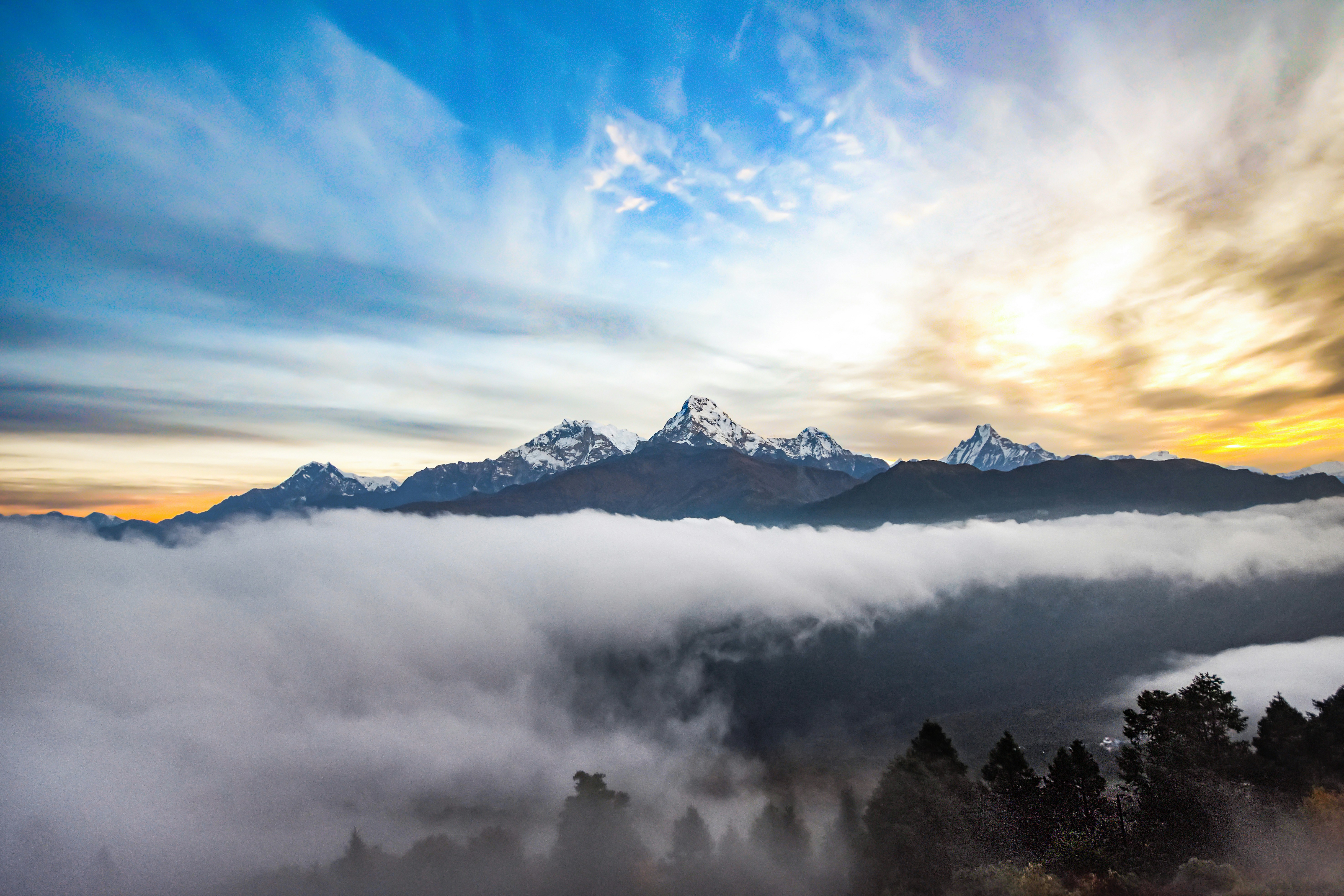
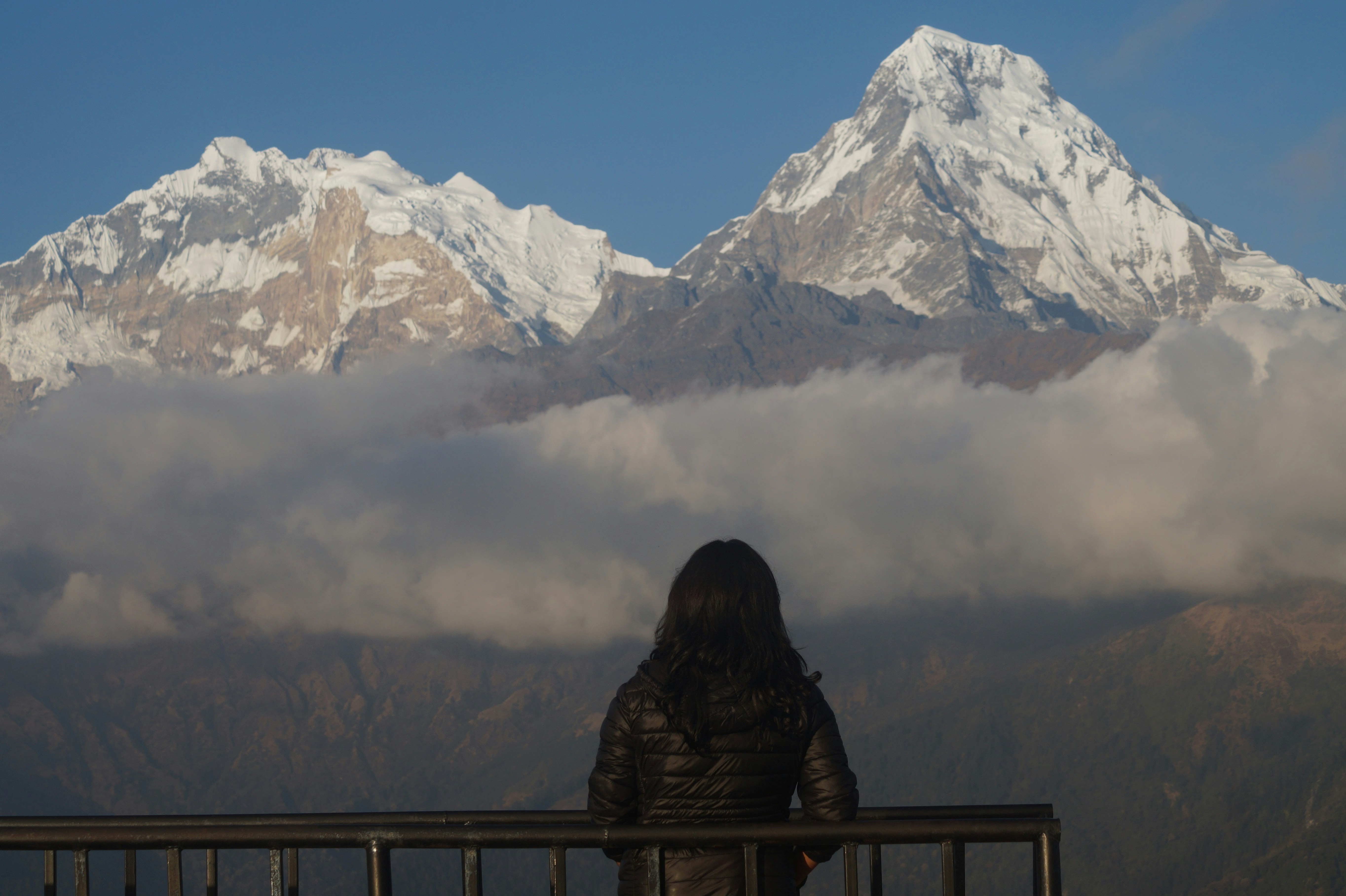
The next day head to Poon Hill, one of the best vantage points in the Annapurna region. Ascending on a well-maintained series of stairs, reach Poon Hill. From the vantage point witness Mountain peaks from Dhaulagiri to Annapurna to Machhapuchhre: Dhaulagiri I ( 8167m), Tukuche (6920m), Nilgiri (6940m), Annapurna South, Annapurna I (8091m), Hiunchuli (6441m), Machhapuchhre (6,993m) and Tarke Kang (7193m). All standing at its grandeur basking in the morning rays of the sun and changing their colors. Next, head further down towards Tadapani. At Tadapani witness great views during sunset. The following day trekking on a downward section along the old-growth forest with views of the snow-white loft peaks to Ghandruk. Ghandruk is a famous village and an ideal stop for trekkers traversing along the Annapurna Circuit. After exploring Ghandruk head down to Nayapul from where heads towards Pokhara. The next day catch a morning flight towards Kathmandu.
Be a part of this marvel tour of the culture and nature with the Alpine Club of Himalaya.
The following permits are required for trekking to Poon Hill Ghorepani Trek and Kathmandu Tour:
Note: All the trekking permits are handled by the Alpine Club of Himalaya.
Along the Annapurna Region Trek, you will be provided with various Nepali, and Tibetan ethnic cuisines, and varieties of continental as well as western meals. The region has several tea-house along the trail and is run by local inhabitants providing basic and minimal facilities to luxury ones, where you will have an opportunity to taste various cuisines which you will miss it most of the trekking trails of Nepal.
Annapurna Region is a plastic-free zone and has banned the use of bottled Mineral Water. However, drinking water taps are accessible with natural water supplies all along the trekking trail which are untreated, so direct use of the water is not recommended, you may refill boiling water or cold filter water from any of the teahouses along the trail.
If you buy a water purification tablet, chlorine drops or utilize SODIS (sunlight assisted) filtration procedures for further assurance, saving money, and reducing plastic pollution.
Tourist-friendly hotels, lodges, and local accommodations are available on trekking trails and, providing with basic accommodation to luxury and grandeur ones. Luxury hotels and teahouse are situated along the trail that suits your budgets providing comfortable beds with a pillow, electric blankets, hot and cold shower, free WIFI, and many more.
Teahouse along Annapurna region provides you with hot shower, western attached bathrooms and the rooms mostly include twin sharing beds as well as a single bed, with hygienic and clean atmosphere, good mattresses, a pillow, and blankets.
Campsites are also available along the trail providing a special opportunity for campers to sleep under the stars.
The best season for trekking in Annapurna Region is during autumn and spring.
The months of September, October, November, March, April, and May are the best time to visit. These months are better in terms of visibility and climate conditions.
During the autumn season, the months of September, October, and November are one of the best times for trekking in this region, as the weather is clear bringing great visibility of the endless mountain ranges and lush green forest with warm temperatures, the nights are clear and is a perfect opportunity for stargazing.
The spring season of March, April, and May is also the best time to visit the Annapurna Region, the end of the winter season brings a change in the region, varieties of colorful blooming trees of the sub-alpine forest, high green pasture lands covered with wildflowers, mild temperatures, and clear weather. In this season you will witness herds of sheep and yaks grazing in the green high lands.
Monsoon season is not favorable as the weather gets harsh and it’s hard to get around the country, with frequent rainstorms and landslides. So, monsoon season is mostly avoided by trekkers.
In the winter season, Annapurna Region receives high snowfall covering most of the trails and making it impossible to travel for this reason.
All clients participating in any activity must have travel insurance. Personal injury, death, hospital expenditures, repatriation fees, helicopter rescue, and any other disease covered by the insurance plan will be given, we highly advise you to acquire a comprehensive insurance plan from a trustworthy insurance company.
Every client must have a valid passport from the return date with a 6 months prior validity by the Nepalese consulate in your country or immigration office at Tribhuvan International Airport in Kathmandu.
Upon arrival at the Kathmandu, Tribhuvan International Airport. A representative from the Alpine Club of Himalaya will assist you with your accommodation. Upon arriving at your hotel, rest for a while. Later join in for a short briefing regarding the trek. In the evening join in for a special dinner program where you will experience excellent Nepalese cuisine.
After breakfast, head on for a full-day sightseeing tour of the Kathmandu Valley. First head towards Durbar (Palace) Square, the epicenter of religious and cultural life, an area filled with old temples and historical significance with glorious old Newari architecture. Some of the sights include Kal Bhairav, Hanuman Dhoka, Taleju Temple, Kasthamandap, and Kumari Ghar; home to the Living Goddess. Afterward, visit Swayambhunath Stupa, one of the oldest Buddhist stupas in the world, which is majestically set high on a hill overlooking Kathmandu Valley. Thereafter proceed towards Pashupatinath Temple, a Hindu temple dedicated to Lord Shiva. This massive temple complex sits alongside the banks of the holy Bagmati River.
Only Hindus are allowed to enter the courtyard of the temple, whereas tourists can see the temple from the eastern side of the Bagmati River. Later visit Boudhanath, a Buddhist Stupa which is one of the largest in the world. This massive structure stands tall with four pairs of eyes each facing the four cardinal directions, watching for the righteous behavior of mankind and human prosperity. After exploring the valley head towards your accommodation. Later join in for a brief orientation regarding the trek.
Note: There are various sites that you can choose from.
After a mouth-watering mountain breakfast at the tea house, we start the trek of the day. Probably the most difficult day of the trek given that the trail goes only higher in elevation. The first part of the trek is a steep upward walk for about 2 Hrs and then a gradual upward walk. The walk on the stone-paved steps is a daring adventure early in the morning. The whole trail leads you through villages and forests to Ghorepani where your efforts will be rewarded with magnificent close-up views of the Himalayas (given the weather is clear). We will stay the night at a Guest House at 2810 meters.
Start by traversing along the deep wilderness and crossing the Thikhedhunga Khola on a suspension bridge. As you progress you will cross another river network of the Bhurungdi Khola on a large bridge at an elevation of 1520 meters. Next, you will be ascending a steep section of a well-maintained series of stone stairs, more than 3300 which eventually leads you to the large Magar village of Ulleri nestled at an elevation of 2080 meters. Furthermore, head past the pasture and lush agriculture fields and you will come across the deep forest trails. Following the trail, you will reach Banthanti.
From Banthanti, traverse across magnificent oak and rhododendron forests crossing several sparkling clear streams, a small ridge to another Magar village of Nangathanti at an elevation of 2460 meters. Along this section witness eight different species of Nepal’s national flower rhododendron. After a brief walk from Nangathanti, you will finally reach the settlement of Ghorepani.
Wake up before dawn and head towards Poon Hill, which is regarded as one of the best vantage points in the Annapurna region. The climb to the top takes around a couple of hours on an ascending trail with well-maintained series of stairs. Upon reaching the top witness views of the great landscapes of the deep wilderness and the snowcapped peaks. Mountain peaks from Dhaulagiri to Annapurna to Machhapuchhre: Dhaulagiri I ( 8167m), Tukuche (6920m), Nilgiri (6940m), Annapurna South, Annapurna I (8091m), Hiunchuli (6441m), Machhapuchhre (6,993m) and Tarke Kang (7193m). All standing at its grandeur basking in the morning rays of the sun and changing their colors. After exploring head towards Tadapani.
Traversing across the deep wilderness of sub-tropical woodlands smeared by orchids and ferns with miles of undergrowth. Passing various settlements and river networks you will eventually reach Tadapani. Upon reaching Tadapani head out to explore the region and start friendly conversation with the locals. Later enjoy awe-inspiring views during the sunset, changing the snowcapped Annapurna South and Fishtail into colorful vistas.
Today’s trail is mostly on downward sections, so take it slow. Start traversing across mossy Rhododendron forest, through deep gorges, and along a clear creek. From this section witness grand views of the old-growth forest and the snow-white loft peaks. As you progress on this downward trail you will emerge out of the wilderness and the landscape starts changing to a dryer, more open forest. After a brief walk, you will eventually reach the settlement of Ghandruk. Ghandruk is a beautiful village mostly inhabited by the Gurung community and a significant stop for various treks of the region.
Witness the amazing vista Annapurna South, Himchuli, Annapurna III, Machhapuchhre, and visit the Gurung museum to get an insight into the culture and lifestyle of the people. After exploring the settlement head towards Nayapul, following the downward trail through sub0tropical woodland. Once you reach Nayapul, head towards Pokhara. Upon reaching Pokhara after a brief rest head out and stroll around the banks of Phewa lake. Later explore the region’s pubs and restaurants.
After breakfast, head towards the airport and catch a flight towards Kathmandu. Witness views of the Himalayas and green lush hills. Upon reaching Kathmandu head towards your accommodation. Later in the evening join in for a farewell dinner program to mark the end of your adventure.
Our staff will drop you off at the airport, bid farewell to your newfound friends as well as Nepal.
Note: All of the aforementioned trekking hours are approximations and should only be used as a general guideline.

Member Since 2025
Gosaikunda, Nepal
Manaslu Base Camp, Samagaun, Nepal






Leave a reply